


📌 Key Takeaways
- Beyond Regulation: The EU ban on destroying unsold stock fixes factory overproduction, but the real sustainability shift happens inside consumer closets.
- The Utility Problem: Most people wear only a fraction of what they own, letting high-quality garments sit forgotten in static wardrobes.
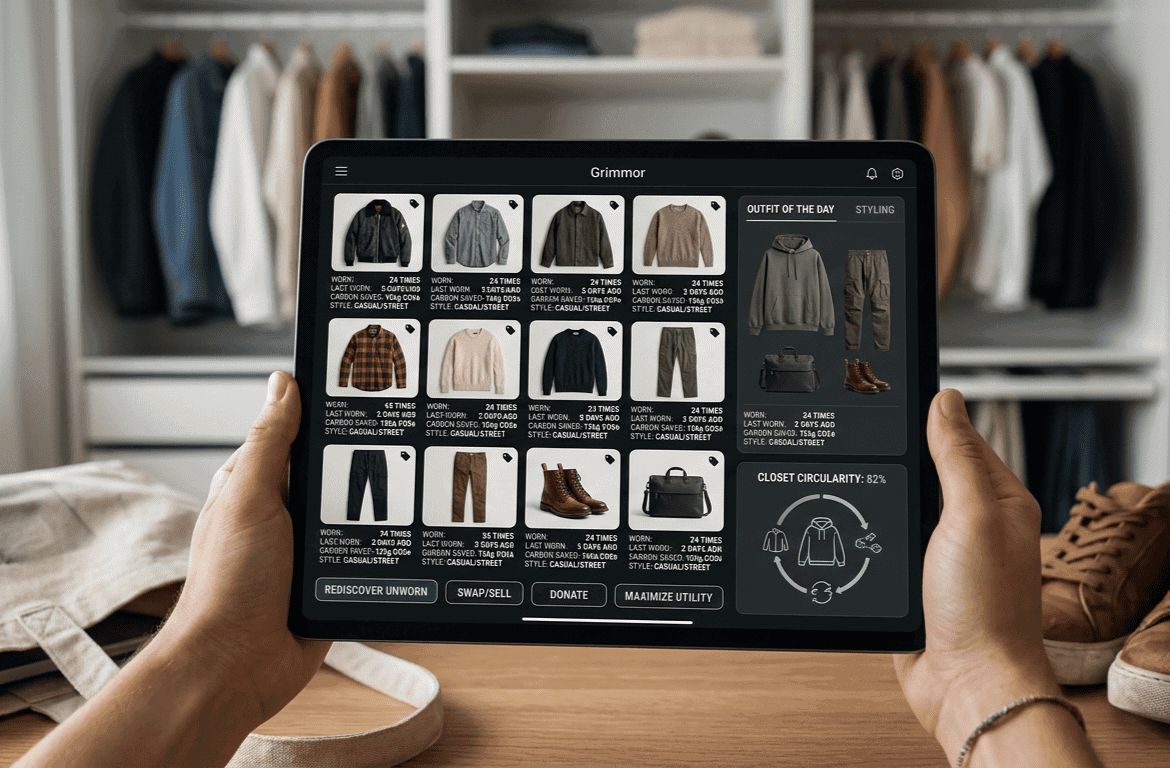
- The Grimmor Solution: Grimmor’s digital closet transforms unworn items into high-utility fashion assets through automated restyling, smart tracking, and effortless peer-to-peer swapping under our primary mandate: Buy Less, Wear More
While landmark European Union rules now prohibit retailers from destroying unsold inventory, statutory laws stop right at the cash register. Factory regulation fixes supply chain waste, but true sustainability requires maximizing garment utility after purchase. At Grimmor, our mission—Buy Less, Wear More—bridges this gap. We convert static, forgotten closets into dynamic digital wardrobes that keep clothes in active rotation.
The Post-Purchase Problem: Why Production Rules Aren’t Enough
The EU Ecodesign for Sustainable Products Regulation (ESPR) marks a major leap forward by stopping brands from burning excess inventory. Yet, the largest environmental footprint often accumulates long after a tag is pulled off.
Overconsumption isn’t just about buying new items; it’s about underutilizing what we already own. Most wardrobes suffer from index stagnation: heavy outerwear, technical hoodies, and daily staples sit hidden behind newer impulse buys.
Legislation forces manufacturers to produce responsibly, but everyday circularity depends on empowering consumers to wear their garments to their absolute maximum potential.
The Grimmor Engine: Turning Personal Closets into Active Hubs
We built Grimmor because we realized that the best wardrobe isn’t waiting in a store window—it’s already hanging in your room. We are bridging the gap between digital convenience and real-world style by turning your closet into an interactive, interconnected hub.
+-----------------------------------------------------------------------+
|                       GRIMMOR CIRCULAR FLOW                           |
|                                                                       |
|  [ Digitization ] ---> [ Smart Restyling ] ---> [ Hyper-Local Action ]|
|         |                                              |              |
|         v                                              v              |
|  Catalog wardrobe          Discover new outfit     Swap nearby or     |
|  in seconds                combinations            monetize micro-shop|
|                                                        |              |
|                                                        v              |
|                                              [ Closet as a Shop ]     |
|                                              Give item a 2nd life     |
+-----------------------------------------------------------------------+
| Lifecycle Phase | Standard Closet Pattern | The Grimmor Digital Solution |
| Active Utility | Wear a few favorites repeatedly; neglect the rest | Algorithmic outfit generation surfaces forgotten garments |
| Wardrobe Indexing | Cluttered drawers and invisible inventory | Visual digital cataloging makes your whole closet searchable |
| Local Discovery & Resale | Static wardrobe sitting idle at home | Hyper-Local Geolocation & “Closet as a Shop” for instant neighborhood trades |
Tangible Features Built for Everyday Life:
Automated AI Restyling: Our engine continuously cross-references your personal inventory to propose unexpected outfit combinations, proving you don’t need to buy anything new to look entirely fresh.
Hyper-Local Geolocation Swapping: Circularity shouldn’t require shipping boxes across the country. With our upcoming location-aware features, you can discover style-matched wardrobes right in your neighborhood. See something you love three streets over? Swap or borrow it locally without the environmental footprint of cross-country transit.
Closet as a Shop: We are empowering every user to become their own curated boutique. Instead of letting unworn pieces gather dust, Closet as a Shop allows you to seamlessly list your personal collection for peer-to-peer rental, trading, or direct resale with a single tap.
Engineering Everyday Circularity: Buy Less, Wear More
The most sustainable outfit in the world is the one hanging in your room right now.
By pairing personal inventory digitizing with automated styling suggestions, Grimmor fundamentally shifts how you interact with your clothes. When you need a refresh, our built-in community network allows you to seamlessly swap, trade, or pass along items to another user, giving every piece a second, third, or fourth life.
Legislation cleans up the supply chain. Grimmor empowers you to lead the circular fashion revolution from your phone.
Frequently Asked Questions (FAQ)
What is the difference between production circularity and post-purchase circularity?
Production circularity focuses on manufacturing policy, such as the EU ban on destroying unsold clothing. Post-purchase circularity focuses on consumer habits—maximizing how frequently garments are worn, restyled, swapped, or resold using platforms like Grimmor’s digital closet.
How does extending garment lifespan reduce environmental impact?
Research published by WRAP UK proves that wearing existing apparel for just nine months longer slashes carbon, water, and textile waste footprints by up to 30 percent. Increasing wear frequency directly reduces the market demand for raw textile extraction.
How does Grimmor’s digital closet work?
Grimmor’s digital closet allows users to digitize their apparel, receive automated outfit recommendations, track wear metrics, and list unneeded garments for peer-to-peer swapping or resale.